A contemporary divorce from modernity *
 Until a few years ago, development economists thought a lot about the crisis in development models and strategies. Industrial development or priority to agriculture? Self-centering or opening up to the world market? The debate was wide open and far more fascinating than the specialists.
Today, there is apparently no more debate possible: capitalism, in its least nuanced version, seems to prevail on the world scale. Strong of the discredit cast on the alternative models, especially socialist, it imposes, from South Korea to Mexico, and from Nigeria to England, the same remedies, energetic and painful, as are the structural adjustment programs, name of so-called "laws of economics".
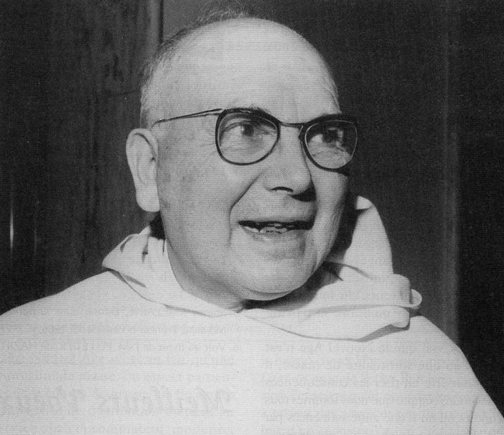
In short, we are at the opposite of a vision like that of Louis-Joseph Lebret, founder of Économie et Humanisme, who understood that the economy was "at the service of man", that is to say fundamentally thought out and organized according to purposes. In this, Lebret, after many others, took up a very old idea of the Christian tradition: the central purpose of social organization must be the search for the common good. On the other hand, among most contemporary neoliberals, the very idea of regulating the economy so that it serves a purpose, even social justice, is dangerous, because it risks disrupting the normal play of economic life. Deregulation has become one of the major elements of neoliberal thought: political regulation as ethical regulation now suffer from the same discredit.
DISCONNECTION OF ECONOMICS, ETHICS AND POLITICS
The liberal approach to economics that we have just mentioned is the fruit of a "great transformation"1, contemporary with modernity itself.
It usually goes back to Adam Smith's book, The Wealth of Nations (1776), the first modern formulation of economics. What fundamentally changes with this book is the empowerment of economic rationality over any ethical, and even political, reference. Henceforth, it is the market (the economic) and no longer the social contract (the political), and even less ethics, which is the true regulator of society. This emergence of the market as an autonomous category puts an end to centuries of submission of the economic to regulatory principles, as formulated, for example, by Saint Thomas Aquinas, in his theory of justice. Admittedly, the scholastics did not have a modern conception of the economy: their concerns were more related to limited questions such as the legitimacy of usury or the fixing of the right price. But their reflection eminently integrated the question of purposes.
The fundamental break that modernity has brought about is the end of the supremacy of "must-be"2. Long subordinated to the morality that regulated fairness in trade, economics has formed into an autonomous category. The market is now the category that plays a structuring role. The idea of a natural harmony of interests was popularized by Smith through the image of the "invisible hand." We find a similar vision in modern neoliberalism: in Friedrich Hayek, for example, when he describes what he calls "the spontaneous order of society", and criticizes the notion of social justice, pernicious in his eyes in the extent to which its goal is leading to proactive initiatives that disrupt the proper functioning of this spontaneous market order3. Michael Nowak praises democratic capitalism for similar reasons4.
We cannot therefore understand the current obsession with deregulation without returning to this story of economic empowerment. There is also a great deal of work to better understand this birth of what Louis Dumont calls "modern economic ideology".
The physiocratic school was a decisive step in the 18th century: for the first time, the economy was conceived as an ordered whole, represented through the image of the economic circuit of François Quesnay. Establishing an overall economic picture, heralding the patterns of Marx's reproduction, the physiocrats try to quantify the flows circulating in the economic circuit: the first affirmation of the economic as an autonomous reality, disconnected from the political. Admittedly, it is still a pre-modern vision insofar as economic activity is thought within the framework of natural law and not in relation to the individual.
The invention of political liberalism is another decisive step in that it prepares for the disconnection of the economic and the political. As Jean-Pierre Dupuy writes, "Liberalism is initially a thought of emancipation. It is part of this movement of emerging modernity which claims to liberate the social from religious transcendence and the individual from social transcendence"5. John Locke played a major role in the development of this idea: while fighting against arbitrariness in politics, he tried to establish private property as an eminent right of the individual. Less and less subject to politics, economics becomes hierarchically superior to it. It is essential to grasp the influence of political liberalism on economic liberalism to understand that, in the end, it translates the modern aspiration for the advent of an immediate, self-regulating society. Whereas, since the 16th century, modern political thought has centered on the concept of social contract, what economic liberalism will deduce from it will help dethrone politics from its regulatory function. Other lesser known but influential authors have helped detach economics from ethics: Bernard Mandeville who, through his Fable des abeilles (1714), describes a world where everyone is moved by their own interest and taste for lucre. Far from causing poverty and disorder, this immoralism is useful to society, which Mandeville sums up in a saying that has remained famous: "Private vices = public benefits". Mandeville announces utilitarian ethics, the theory of the proper use of passions6.
These various shifts are closely linked to the very emergence of modernity, because they aim at the affirmation of the individual, in relation to the supernatural and in relation to the State. Smith was the first to follow through on this logic by defining the economy as an interaction of private interests, an interaction whose harmony is immanent and does not require external intervention. Forecast of modern minimal state theses. There is therefore no need to introduce coherence from without. On the contrary, we must respect as much as possible the harmonious functioning of this collective game of private interests.
Of course, each of these contributions would require more precise analysis. However, their only reminder helps to better understand the current strength of many neoliberal theses: they are the fruit of a profound evolution of Western culture, contemporary with the birth and flourishing of modernity.
AN ECONOMY AT THE SERVICE OF HUMANS
It was the main concern of L.-J. Lebret, at the very moment when the postulate of self-regulation of capitalism was in default. This is an even more urgent question today, as it is obvious that the gap between the North and the South is widening, and that the inequalities are widening in the industrialized countries themselves. Admittedly, it is not easy to reintroduce a questioning on the aims of the economy in a cultural context marked by the evolution that we have just mentioned. Some points can nevertheless be highlighted.First of all, we have seen a renewed interest in ethics in the economic world in recent years: in the form of seminars and chairs funded by large companies, ethics seems to be back, to the point of constituting a fashion7 . Coming from the United States, the craze for business ethics often appears as a utilitarian diversion from a true ethical questioning8: business ethics means less deliberation and questioning about values than a new way of managing, without conflicts, the growing contradictions engendered by economic and social development.
There is a great risk that there is more a concern for legitimacy than a concern for questioning. This does not mean, however, that through this fashion there does not appear here or there a real interest in a reflection on values and purposes, in the world of business. In fact, this approach is still very little advanced, and the existing work is more a problem than a very well-constructed proposition9.
This underscores that Christian reflection is still very weak in the face of the difficult questions posed by the modern economy. Attempts by episcopates to take a position on difficult subjects such as work sharing or taxation are often little received by professional circles who see it as an optional, generous speech, but not acceptable, because it is too simplistic and ill-informed10. Opportunity to underline how the rich heritage of the Social Doctrine of the Church has been more incomplete in its development: born in the face of the great injustices of the industrial revolution, Social Doctrine has more developed a reflection of a social type on the rights of workers, that a reflection on the creation of wealth, its distribution, etc. It is only with Gentesimus annus that the question of economic systems begins to be addressed for itself. This means that a century after Rerum novarum, the thinking is still in its infancy. The Church did not "enter the economy", as Émile Poulat whishfully hoped11.
Returning to Lebret is therefore still rich in lessons. Lebret's contact with economic issues dates back to his immersion in the social crisis of Breton ports at the end of the 1930s. A man of strong humanity, he allowed himself to be touched by the distress of sailors and began his reflection on the human economy, an economy that is more at the service of man.
Behind the more generous than effective appearance of this slogan, there was already an economic analysis in Lebret's, close to that of François Perroux: man is one of the resources which the economy implements. And the success of an economy is also the capacity for maximum development of human resources. Another major contribution from Lebret: the importance of expertise and thoroughness in dealing with these issues. Very early on, he worked as an expert for governments and international organizations, thus showing the need and the possibility of reconciling the concern for the ends - and particularly the common good - which came to him from his Thomistic training and the methodological rigor of the economic analysis. The founder of Économie et Humanisme is both a man of vision and a practitioner in the field. This has still hardly penetrated Christian circles.
Reintroducing the need for an ethical type of regulation, Lebret also prepares, in his works, a rehabilitation of the political: the State has a mission in the construction of macro-economic balances. Even before Keynes rehabilitates the regulatory role of the state in economic theory, Lebret takes up an idea that François Perroux will later formulate with genius in L'Économie du 20e siècle: "Now equilibria are sought". The role of the state is not to replace actors but to assert priorities and preferences, in short, to bring values into play. The social but also economic impasses to which contemporary neoliberalism leads make it urgent to return to these concerns, which two centuries of individual emancipation have gradually ousted.
RECONCILING THE THREE HANDS
 Speaking at the end of the 1991 Social Weeks of France, Michel Camdessus, managing director of the International Monetary Fund, proposed to "reconcile the three hands": "the invisible hand", that of the market, which its own operating rules, which should not be disturbed too much under penalty of creating serious disorders; "The hand of justice", that of the State, which arbitrates and distributes using force, because the market is far from providing for it in a harmonious manner; finally "the fraternal hand", that of the neighbor, always necessary to reintroduce humanity where the collective effort of a just distribution has not succeeded12. Modern society, with its proliferation of new poverty, shows us that this is far from superfluous. But this is to be built against the backdrop of an economic ideology that was born and grew in the very movement of modernity.
1 POLANYI, K., La grande transformation, Paris, Gallimard, 1983, 419 p.
3 HAYEK, Fr., Droit, législation et liberté , Paris, PUF, 1983 (traduction française), t. 2.
4 NOWAK, M., Une éthique économique, les valeurs de l’économie de marché , Paris, Cerf, 1987, 45 p.
7 Cf. La vague éthique, Projet, no 224, hiver 1990-91.
10 This was the case in France for the paper Vers de nouveaux modes de vie. The letter of the American bishops on the economy: Economic Justice for All, is much better prepared with the help of experts, and is already less subject to criticism, even if it was hardly received more because of the type of requirements it puts forward (priority for the poorest, for example).
11 POULAT, É., Pensée chrétienne et vie économique, Foi et développement, no 155-157, dec. 1987.
* Jean-Jacques Pérennès, dominican priest, Présence, Vol. 4, N. 31, December 1995, p. 26-28.